




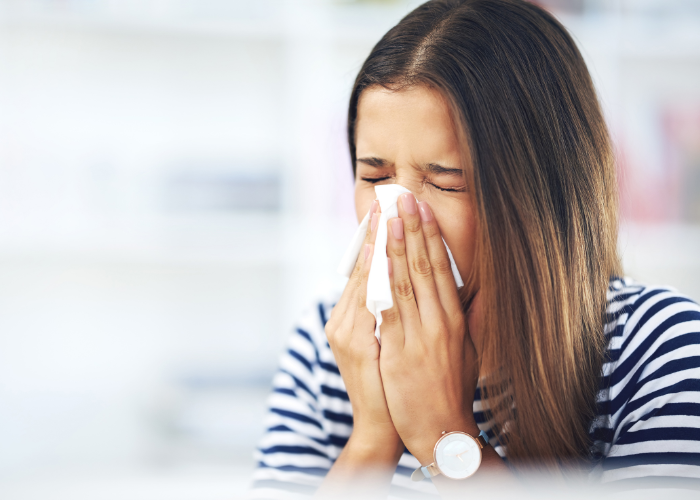
Allergies
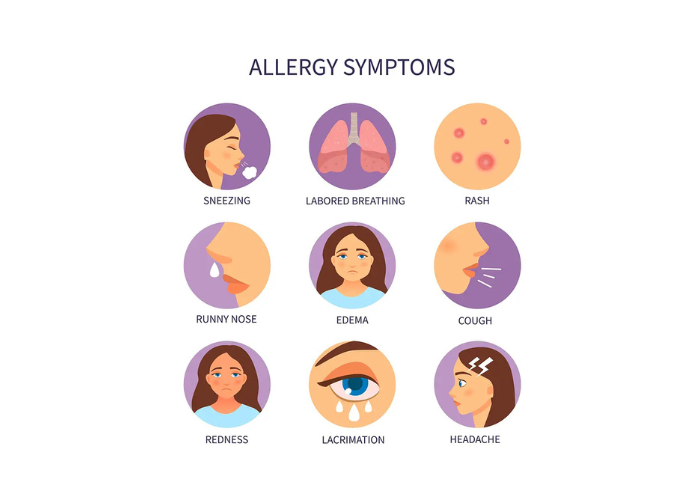
Allergies occur when the immune system reacts to substances that are normally harmless, known as allergens. Common allergens include pollen, dust mites, pet dander, certain foods, insect stings, and medications. When exposed, the body releases chemicals like histamine, leading to symptoms such as sneezing, itching, runny nose, watery eyes, skin rashes, and, in severe cases, difficulty breathing. Allergies can affect different parts of the body, including the skin, respiratory system, digestive tract, and eyes. While most allergies are mild, some can trigger life-threatening reactions called anaphylaxis, which require immediate medical attention.
Diagnosis typically involves a combination of medical history, physical examination, skin prick tests, blood tests, and sometimes elimination diets for food allergies. Management focuses on avoiding triggers, relieving symptoms, and preventing severe reactions. With proper treatment, most people with allergies can lead normal, healthy lives. Education on recognizing early warning signs and having emergency medications like epinephrine can be lifesaving in critical cases. Consult us for Allergy Treatment in Khammam for accurate diagnosis, effective symptom management, and personalized care to improve your overall quality of life.
Care & Management of Allergies
- Identify and avoid allergens (pollen, dust, pets, foods)
- Keep indoor environment clean: vacuum, air filters
- Use hypoallergenic bedding and clothing
- Take prescribed antihistamines or nasal sprays
- Monitor for early signs of allergic reactions
- Carry emergency epinephrine (for severe allergies)
- Maintain a healthy diet and hydration
- Avoid smoking and environmental pollutants
- Follow-up with allergist for testing and management
- Educate family and caregivers about triggers and precautions
Treatment of Allergies
1. Medications:
2. Immunotherapy(Allergy Testing in Khammam):
3. Lifestyle & Home Measures:
Frequently asked questions
An abnormal immune response to harmless substances called allergens.
Most allergies cannot be cured, but symptoms can be effectively managed.
A severe, life-threatening allergic reaction that requires immediate treatment.
Through medical history, physical exam, skin prick tests, blood tests, or elimination diets.