




Lung Infections(Pneumonia)
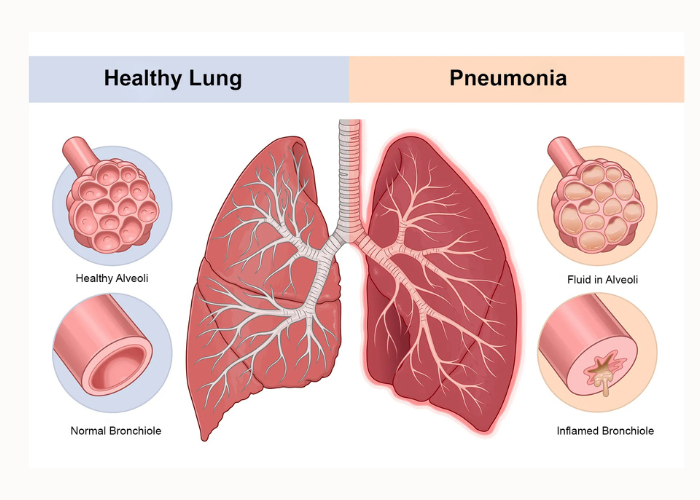
Pneumonia is an infection of the lungs that causes inflammation in the air sacs (alveoli), which may fill with fluid or pus. It can be caused by bacteria, viruses, fungi, or other microorganisms. Common symptoms include cough, fever, chills, shortness of breath, chest pain, fatigue, and sometimes vomiting or confusion in older adults. Pneumonia can range from mild to life-threatening, especially in infants, elderly people, and those with weakened immune systems or chronic illnesses. Early recognition and treatment are critical for preventing serious complications.
Diagnosis involves physical examination, chest X-rays, blood tests, and sometimes sputum cultures to identify the causative organism. Treatment depends on the type of pneumonia and may include antibiotics, antiviral or antifungal medications, supportive care, and hospitalization in severe cases. Preventive measures such as vaccination, good hygiene, and avoiding smoking can significantly reduce the risk of lung infections. Consult us for Pneumonia Diagnosis and Treatment in Khammam for accurate diagnosis, timely intervention, and comprehensive care to ensure a faster recovery and better lung health.
Care & Management of Lung Infections(Pneumonia)
- Complete prescribed antibiotics or antiviral therapy
- Rest and adequate sleep
- Stay hydrated
- Monitor breathing and oxygen levels
- Use humidifiers to ease breathing
- Avoid smoking and secondhand smoke
- Nutrition support: healthy diet
- Isolation if contagious
- Vaccinations: pneumococcal & flu vaccines
- Follow-up with doctor for recovery check
Treatment of Lung Infections(Pneumonia)
1. Medications:
2. Supportive Care:
3. Hospitalization (Severe Pneumonia Treatment in Khammam):
Frequently asked questions
Through droplets from coughs or sneezes, or by inhaling infectious agents.
Yes, especially in infants, elderly, and immunocompromised individuals.
Mild cases: 1–3 weeks; severe cases may take longer with full recovery.
Yes, through vaccines, good hygiene, avoiding smoking, and staying healthy.