




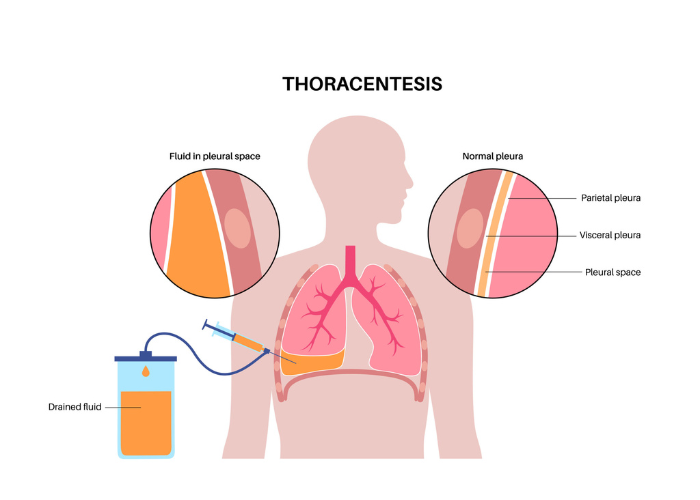
Thoracentesis
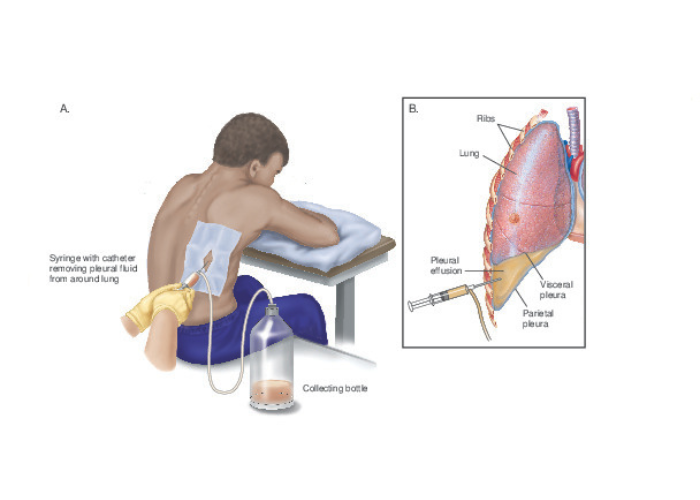
Thoracentesis is a medical procedure used to remove excess fluid (pleural effusion) from the space between the lungs and the chest wall, called the pleural space. This fluid buildup can occur due to infections, heart failure, liver or kidney disease, cancer, or inflammatory conditions. By removing the fluid, thoracentesis helps relieve symptoms such as shortness of breath, chest discomfort, and difficulty breathing. The procedure also allows the fluid to be analyzed in a laboratory to determine the underlying cause of the effusion.
The procedure is usually performed under local anesthesia with ultrasound guidance to improve accuracy and reduce complications. A thin needle or catheter is inserted into the pleural space to aspirate the fluid. Thoracentesis is generally safe, though minor complications like pain, coughing, or bruising may occur. In rare cases, complications can include infection, bleeding, or puncture of the lung (pneumothorax). It is an essential tool in both diagnosing and treating conditions that cause pleural effusions. Consult us for Thoracentesis Procedure in Khammam for safe, accurate, and expert care to relieve symptoms and diagnose underlying lung conditions.
Care & Management After Thoracentesis
- Rest for a few hours post-procedure
- Avoid strenuous activity for 24 hours
- Monitor for shortness of breath, chest pain, or coughing up blood
- Report fever, chills, or increased pain immediately
- Follow up for lab results of the fluid analysis
- Maintain hydration
- Take prescribed pain medications if needed
- Keep puncture site clean and dry
- Avoid heavy lifting until cleared by doctor
- Attend follow-up appointments for monitoring
Uses & Importance of Thoracentesis
1. Diagnostic:
2. Therapeutic(Ultrasound-Guided Thoracentesis in Khammam):
3. Monitoring:
Frequently asked questions
A procedure to remove excess fluid from the pleural space around the lungs.
Local anesthesia is used, so discomfort is minimal; mild soreness may occur afterward.
Usually 30–60 minutes depending on the amount of fluid.
Minor risks include pain, coughing, bruising; rare complications include infection, bleeding, or lung puncture.