




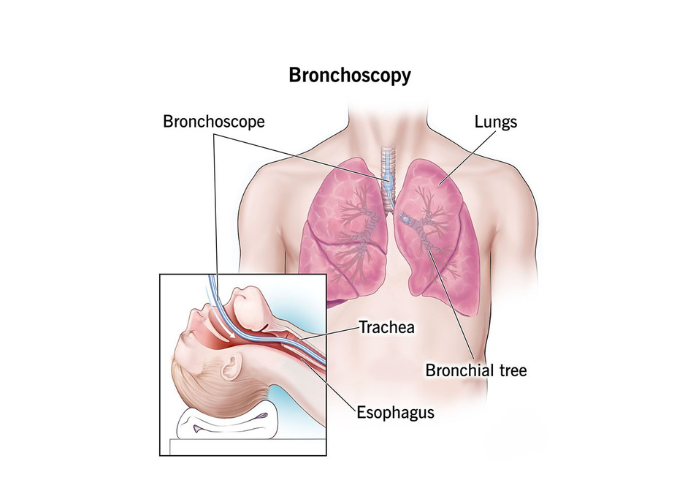
Bronchoscopy
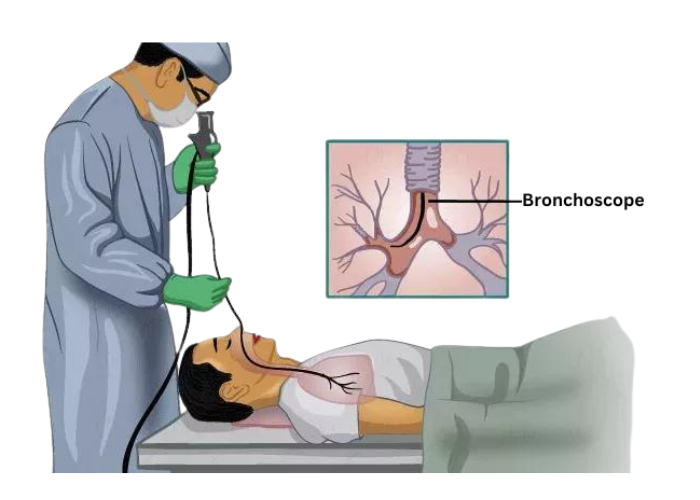
Bronchoscopy is a medical procedure that allows doctors to look inside the airways, including the trachea, bronchi, and lungs, using a thin, flexible tube called a bronchoscope. This instrument has a light and a camera, enabling direct visualization of the airways to detect abnormalities such as tumors, inflammation, infection, or blockages. Bronchoscopy can also be used to collect tissue samples (biopsy), remove mucus or foreign objects, and assist in the placement of stents. It is commonly performed when patients have persistent cough, unexplained lung infections, abnormal imaging findings, or suspected lung cancer.
The procedure is typically done under local anesthesia with sedation or, in some cases, general anesthesia. It is considered safe, though minor complications like bleeding, cough, or sore throat may occur. Advanced techniques such as endobronchial ultrasound (EBUS) or navigational bronchoscopy allow for more precise diagnosis and treatment of lung diseases. Bronchoscopy is an essential tool in pulmonology, providing both diagnostic and therapeutic benefits for a wide range of respiratory conditions. Consult us for Advanced Bronchoscopy Services in Khammam for accurate diagnosis, minimally invasive treatment, and comprehensive respiratory care.
Care & Management After Bronchoscopy
- Rest for several hours after procedure
- Avoid eating or drinking until fully alert
- Monitor for bleeding, severe cough, or shortness of breath
- Take prescribed medications if needed
- Report fever or persistent chest pain immediately
- Follow-up with doctor for biopsy results
- Avoid strenuous activity for 24 hours
- Maintain hydration
- Use throat lozenges for mild sore throat
- Keep airway hygiene and avoid irritants
Treatment & Uses of Bronchoscopy
1. Diagnostic Uses(Bronchoscopy with Biopsy in Khammam):
2. Therapeutic Uses:
Frequently asked questions
A procedure to examine the airways and lungs using a thin, flexible tube with a camera.
It may cause mild discomfort, but sedation or anesthesia is used to minimize pain.
Minor risks include bleeding, cough, infection, or sore throat; serious complications are rare.
Usually 30–60 minutes depending on the purpose.