




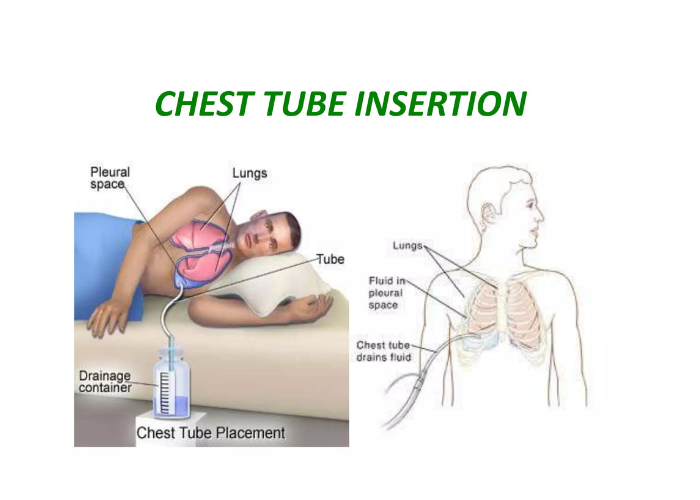
Chest Tube Insertion
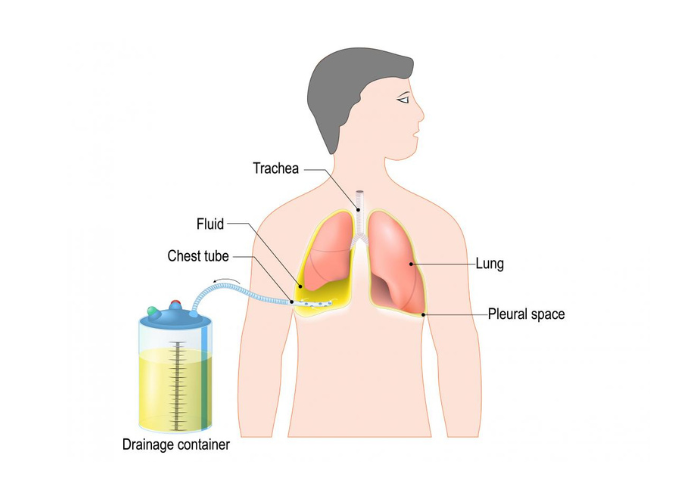
Chest tube insertion, also called thoracostomy, is a medical procedure in which a flexible tube is inserted into the pleural space (between the lungs and chest wall) to remove air, fluid, or pus. This helps re-expand a collapsed lung (pneumothorax), drain pleural effusions, or treat infections like empyema. The procedure is commonly performed in emergencies, such as trauma, or for patients with lung disease complications. Chest tube insertion provides immediate relief from breathing difficulties and prevents further lung or heart complications.
The procedure is typically done under local anesthesia with or without sedation. The tube is connected to a drainage system that allows fluid or air to exit while preventing it from re-entering the pleural space. Regular monitoring is required to ensure proper function and detect complications such as infection, bleeding, or tube dislodgement. Chest tube insertion is a vital life-saving intervention in respiratory medicine and thoracic care. Consult us for the Best Chest Tube Insertion in Khammam for safe, timely, and expert management of pleural conditions with advanced critical care support.
Care & Management After Chest Tube Insertion
- Keep the drainage system below chest level
- Monitor for shortness of breath, chest pain, or fever
- Check for air leaks and tube patency regularly
- Avoid pulling or kinking the tube
- Maintain site hygiene and dressing changes as instructed
- Take prescribed pain medications
- Avoid strenuous activity until cleared by doctor
- Keep follow-up appointments for tube removal and assessment
- Monitor drainage color and amount
- Educate patient and family on signs of complications
Uses & Importance of Chest Tube Insertion
1. Therapeutic(Best Intercostal Chest Drain (ICD) Insertion in Khammam):
2. Emergency Care:
3. Monitoring & Recovery:
Frequently asked questions
A procedure to drain air, fluid, or pus from the pleural space to help the lung expand.
Local anesthesia and sedation are used; mild discomfort may continue after the procedure.
Depends on the condition; usually until the lung is re-expanded and drainage stops.
Infection, bleeding, pain, tube dislodgement, or lung injury (rare).