




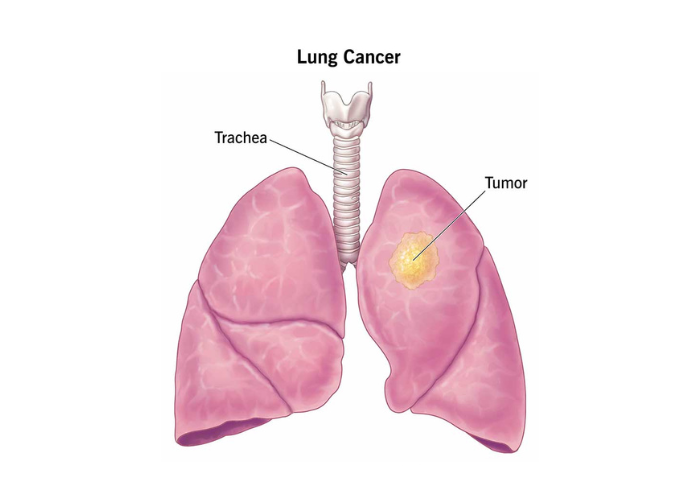
Lung Cancer
Lung cancer is a malignant growth of cells in the lungs that can interfere with normal lung function and spread to other parts of the body (metastasis). It is one of the most common and serious cancers worldwide. There are two main types: non-small cell lung cancer (NSCLC), which accounts for about 85% of cases, and small cell lung cancer (SCLC), which is more aggressive and spreads rapidly. Risk factors include smoking, exposure to secondhand smoke, air pollution, asbestos, radon gas, and a family history of lung cancer. Symptoms may include persistent cough, coughing up blood, chest pain, shortness of breath, fatigue, unexplained weight loss, and recurrent lung infections.
Diagnosis typically involves imaging such as chest X-rays, CT scans, PET scans, and biopsy to confirm cancer type and stage. Early detection is critical for effective treatment and improved survival rates. Treatment depends on the type, stage, and overall health of the patient and may include surgery, chemotherapy, radiation therapy, targeted therapy, or immunotherapy. Lifestyle modifications, smoking cessation, and supportive care also play an essential role in management. Consult us for Lung Cancer Treatment in Khammam for early diagnosis, advanced treatment options, and comprehensive care tailored to your individual needs.
Care & Management of Lung Cancer
- Early diagnosis and regular screening
- Quit smoking and avoid secondhand smoke
- Balanced diet and proper nutrition
- Manage symptoms: cough, breathlessness, fatigue
- Monitor for treatment side effects
- Regular follow-ups and imaging
- Pulmonary rehabilitation
- Pain management and palliative care if needed
- Support groups and psychological support
- Educate patient and family about disease and treatment options
Treatment of Lung Cancer
1. Surgery:
2. Chemotherapy(Lung Tumor Treatment in Khammam):
3. Radiation Therapy:
4. Targeted Therapy & Immunotherapy:

Frequently asked questions
Persistent cough, coughing blood, chest pain, shortness of breath, unexplained weight loss.
Smokers, people exposed to secondhand smoke, environmental toxins, or with a family history.
Early-stage lung cancer can often be treated successfully; advanced stages focus on control and quality of life.
Imaging (X-ray, CT, PET scans) and biopsy to confirm type and stage.