




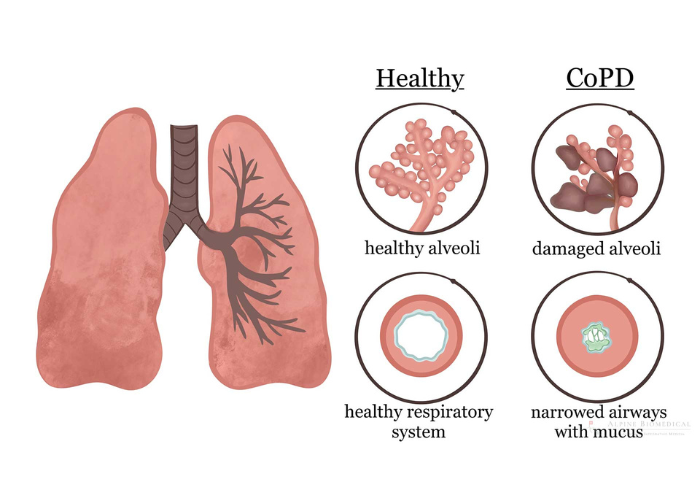
COPD
Chronic Obstructive Pulmonary Disease (COPD) is a progressive lung disease that makes it difficult to breathe due to obstruction of airflow in the lungs. It primarily includes two conditions: chronic bronchitis, characterized by long-term cough and mucus production, and emphysema, where the air sacs in the lungs are damaged. COPD is often caused by long-term exposure to irritants such as cigarette smoke, air pollution, chemical fumes, and dust. The disease gradually worsens over time, making simple activities like walking or climbing stairs challenging for affected individuals. Consult us for the Best COPD Treatment in Khammam to manage symptoms effectively, improve lung function, and enhance quality of life.
Common symptoms of COPD include chronic cough, shortness of breath, wheezing, chest tightness, and frequent respiratory infections. The disease can significantly impact quality of life and may lead to complications such as heart problems, lung infections, and respiratory failure. Early diagnosis and proper management are crucial to slowing the progression of COPD and improving daily functioning. Lifestyle changes, medical treatment, and pulmonary rehabilitation can help patients lead a more comfortable life.
COPD Care & Management
- Early Diagnosis & Lung Function Screening
- Personalized COPD Treatment Plans
- Inhaler & Nebulization Therapy
- Pulmonary Rehabilitation & Breathing Exercises
- Emergency COPD Care Services
- Oxygen Therapy & Monitoring
- Smoking Cessation & Lifestyle Counseling
- Management of COPD Exacerbations
- Long-Term COPD Control & Follow-Up
- Nutritional & Psychological Support
Treatment of COPD
1. Lifestyle Changes:
2. Medications:
3. Pulmonary Rehabilitation:
4. Oxygen Therapy(Advanced COPD Care in Khammam):
5. Surgery (in severe cases):

Frequently asked questions
COPD is a chronic lung disease that causes airflow obstruction, making it difficult to breathe. It includes chronic bronchitis and emphysema.
Common symptoms include chronic cough, shortness of breath, wheezing, chest tightness, and fatigue.
The main causes are long-term exposure to cigarette smoke, air pollution, dust, chemical fumes, and genetic factors.
There is no cure for COPD, but treatment can slow its progression and improve quality of life.